Kuan‑Lin (Brian) Chen (陳冠霖)

M.S. student @ NTU GICE

Portrait of Kuan-Lin (Brian) Chen

About

I am currently a master's student at the Graduate Institute of Communication Engineering, National Taiwan University (NTU), advised by Professor Jian-Jiun Ding (丁建均).
My research interests span computer vision, image processing, and deep learning. Previously I explored semantic segmentation for motion-blur detection, camera ISP topics such as automatic white balance (AWB) and image quality assessment (IQA), and generative modeling with latent diffusion, large language model.

News

2024-09 → Present
I am now a master’s student in the Graduate Institute of Communication Engineering at National Taiwan University (NTU GICE).
2024-07
I receive the Presidential Award in 112-1.
2023-07
I’m honored to receive 2023 中國工程師學會(Chinese Institute of Engineers, CIE)學生分會工程論文競賽 資訊組 佳作獎.

Research

H-index: 4  |  i10-index: 1
Guitar Tone Morphing by Diffusion-based Model

Guitar Tone Morphing by Diffusion-based Model

Kuan-Yu Chen, Kuan-Lin Chen, Yu-Chieh Yu, Jian-Jiun Ding
APSIPA ASC, 2025
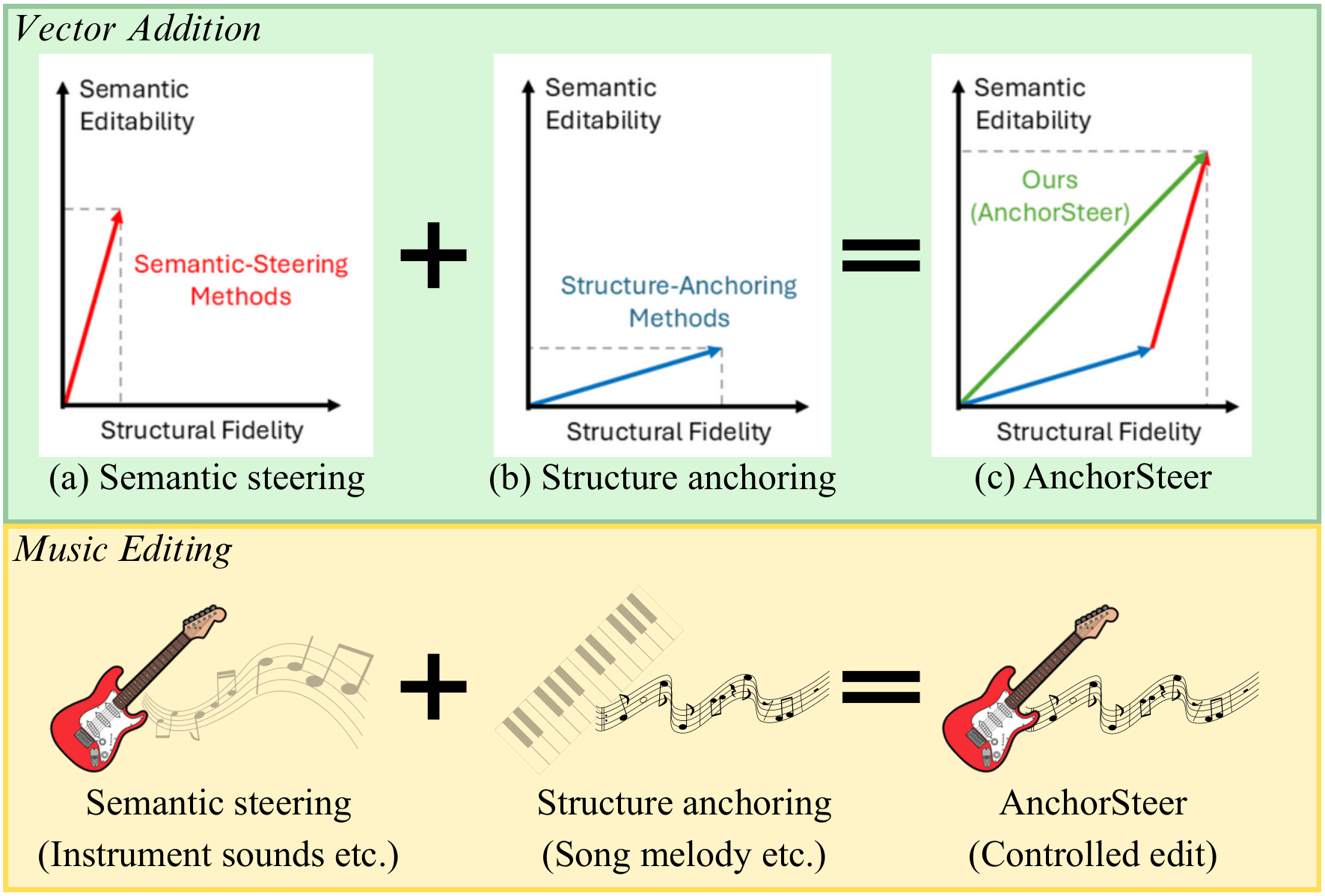
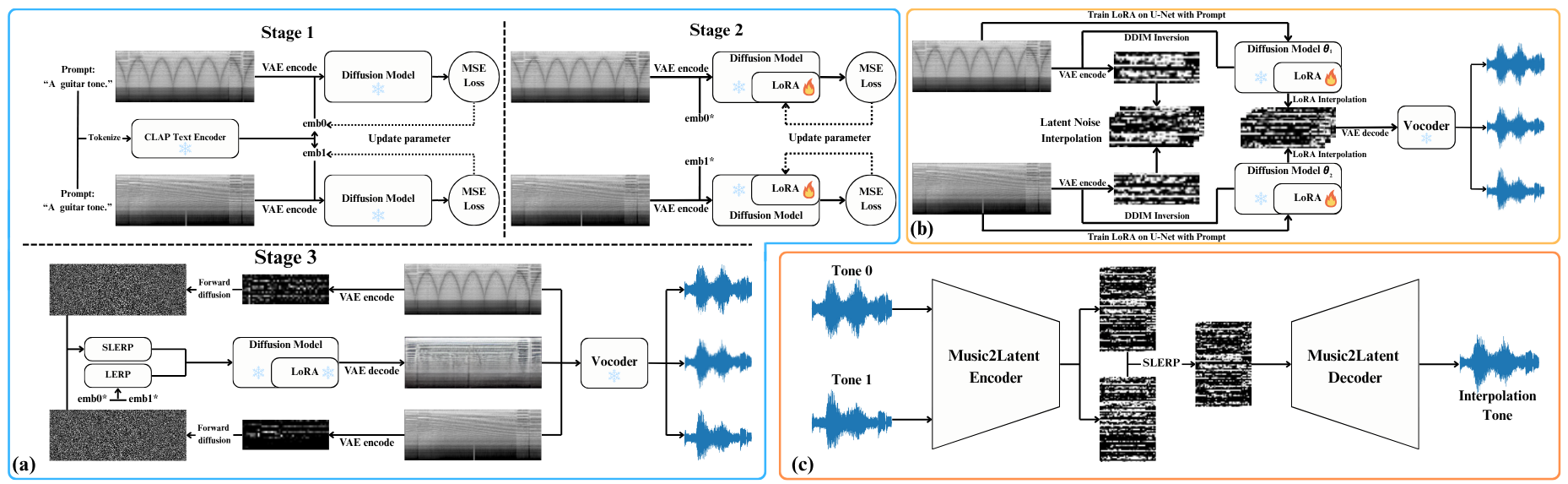
We compare three latent-diffusion approaches (with single- and dual-sided LoRA) against a non-diffusion baseline that performs spherical interpolation in Music2Latent. Experiments show that Music2Latent achieves the best perceptual quality (MOS 4.3 / 5.0) and produces smoother, more natural tone transitions.
FRIEREN: Face Resizing Image Quality Evaluation via Robust Estimation of Image Naturalness

FRIEREN: Face Resizing Image Quality Evaluation via Robust Estimation of Image Naturalness

APCCAS, 2025
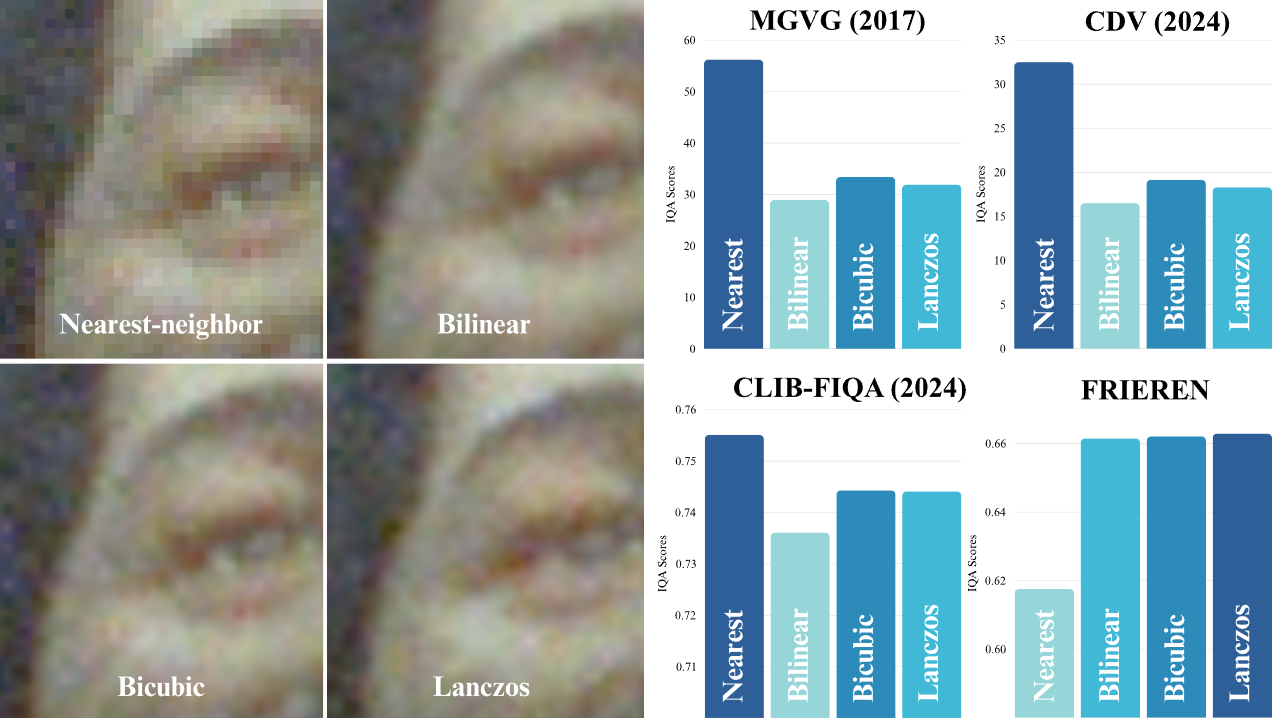
In practice, enlarging faces via nearest, bilinear, bicubic, or Lanczos interpolation introduces high-frequency artifacts that many NR-IQA methods misread as sharpness. FRIEREN estimates motion noise from a single frame, DWT-based spatial noise, and an HVS-aligned sharpness measure, then regresses quality via KANs; it better matches human preference (Lanczos > Bicubic > Bilinear > Nearest) and outperforms SOTA on MS1MV2 (PLCC 0.8954 / SROCC 0.8723).
Deep reinforcement learning–based collision avoidance strategy for multiple unmanned aerial vehicles

Deep reinforcement learning–based collision avoidance strategy for multiple unmanned aerial vehicles

Ping-Huan Kuo, Kuan-Lin Chen, Yu-Sian Lin, Yu-Chih Chiu, Chao-Chung Peng
Engineering Applications of Artificial Intelligence (EAAI), 2025
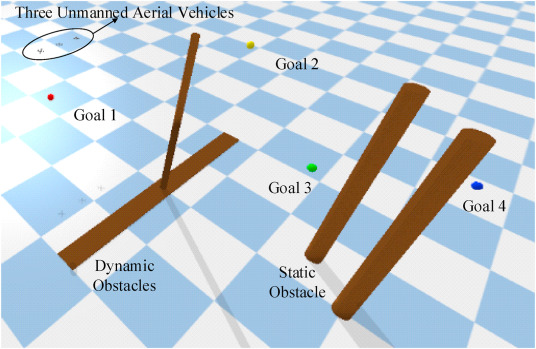
We propose a two-stage training pipeline for multi-UAV collision avoidance: a self-designed reward first teaches a single UAV to traverse multiple goals while avoiding dynamic/static obstacles, then second-stage training enable three UAVs to complete the task while maintaining safe separation; A2C and PPO converge reliably, whereas SAC largely fails.
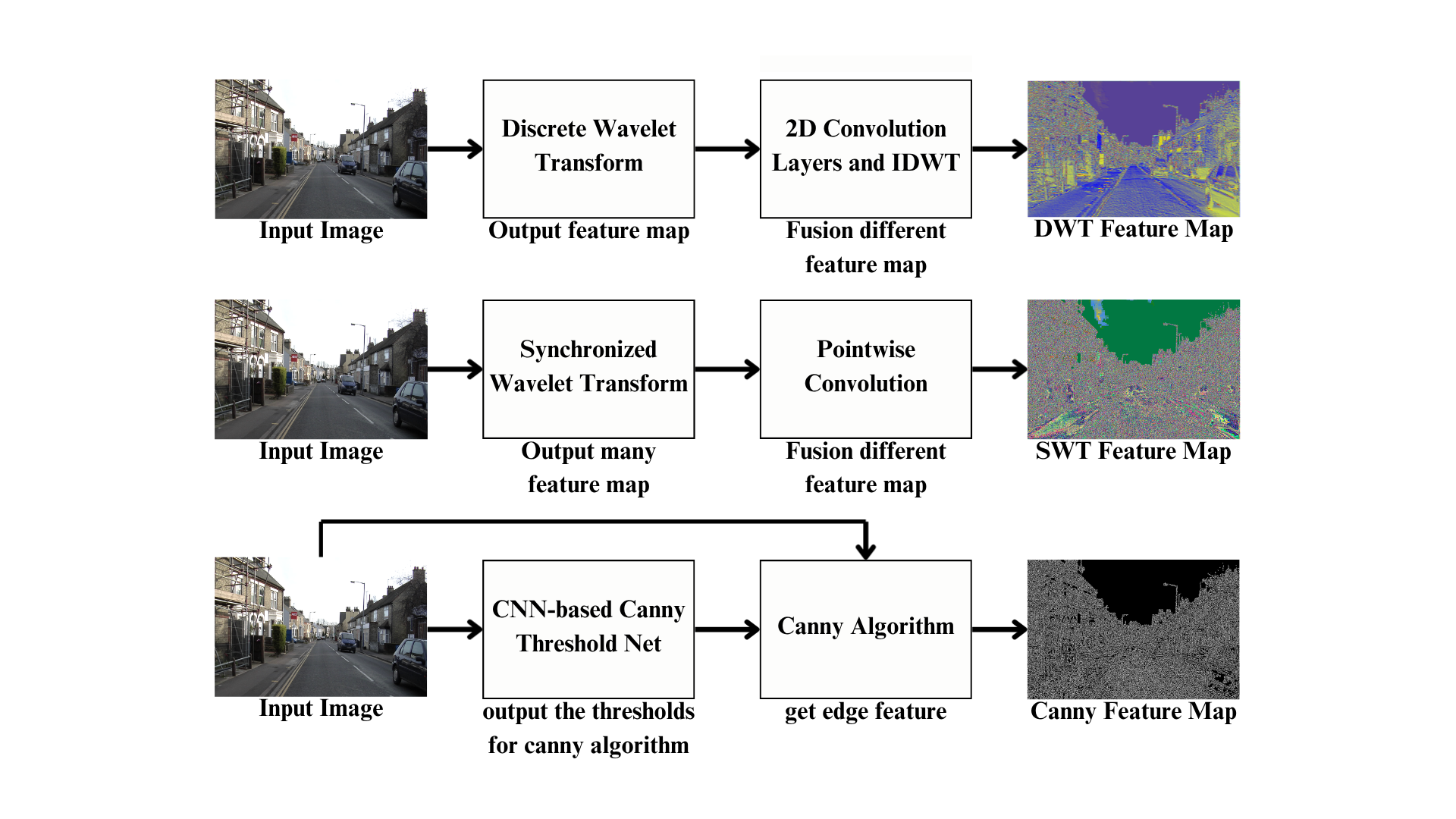
Enhancement of Semantic Segmentation with Edge Networks Using Wavelets and Adaptive Canny Thresholding

Enhancement of Semantic Segmentation with Edge Networks Using Wavelets and Adaptive Canny Thresholding

Kuan-Lin Chen, Jian-Jiun Ding
ICISPC, 2025
We feed wavelet-based (2D-DWT/2D-SWT) edge features and adaptively learned Canny thresholds as auxiliary inputs to PIDNet-S, boosting CamVid mIoU from 73.8 to 77.4 with improved boundary handling.
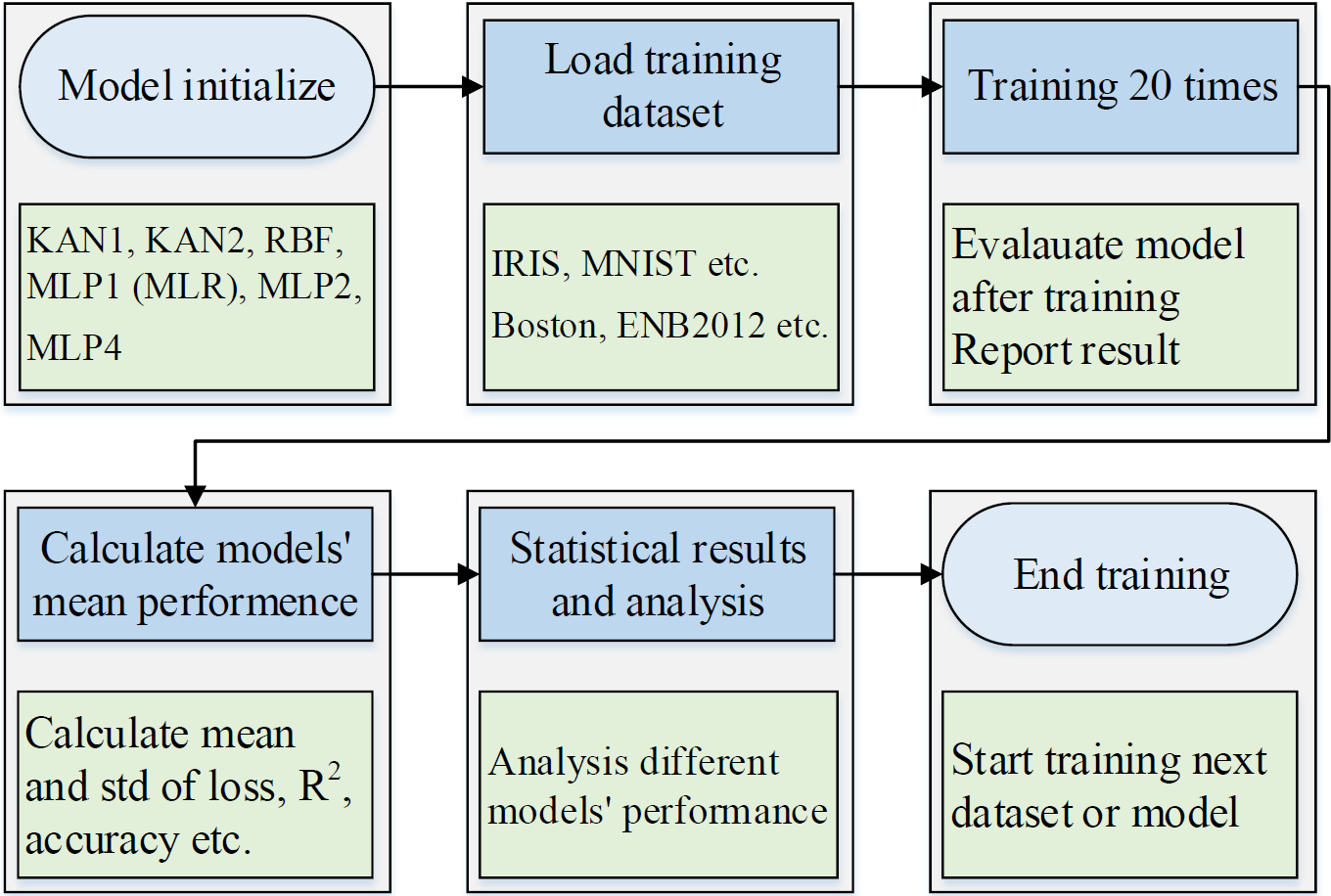
Kolmogorov-Arnold Networks with Trainable Activation Functions for Data Regression and Classification

Kolmogorov-Arnold Networks with Trainable Activation Functions for Data Regression and Classification

Kuan-Lin Chen, Jian-Jiun Ding
ICAIIC, 2025
We study Kolmogorov-Arnold Networks (KANs), benchmarking them against MLPs and RBFs across multiple classification and regression datasets and analyzing hyperparameter sensitivity—particularly depth and basis size k.
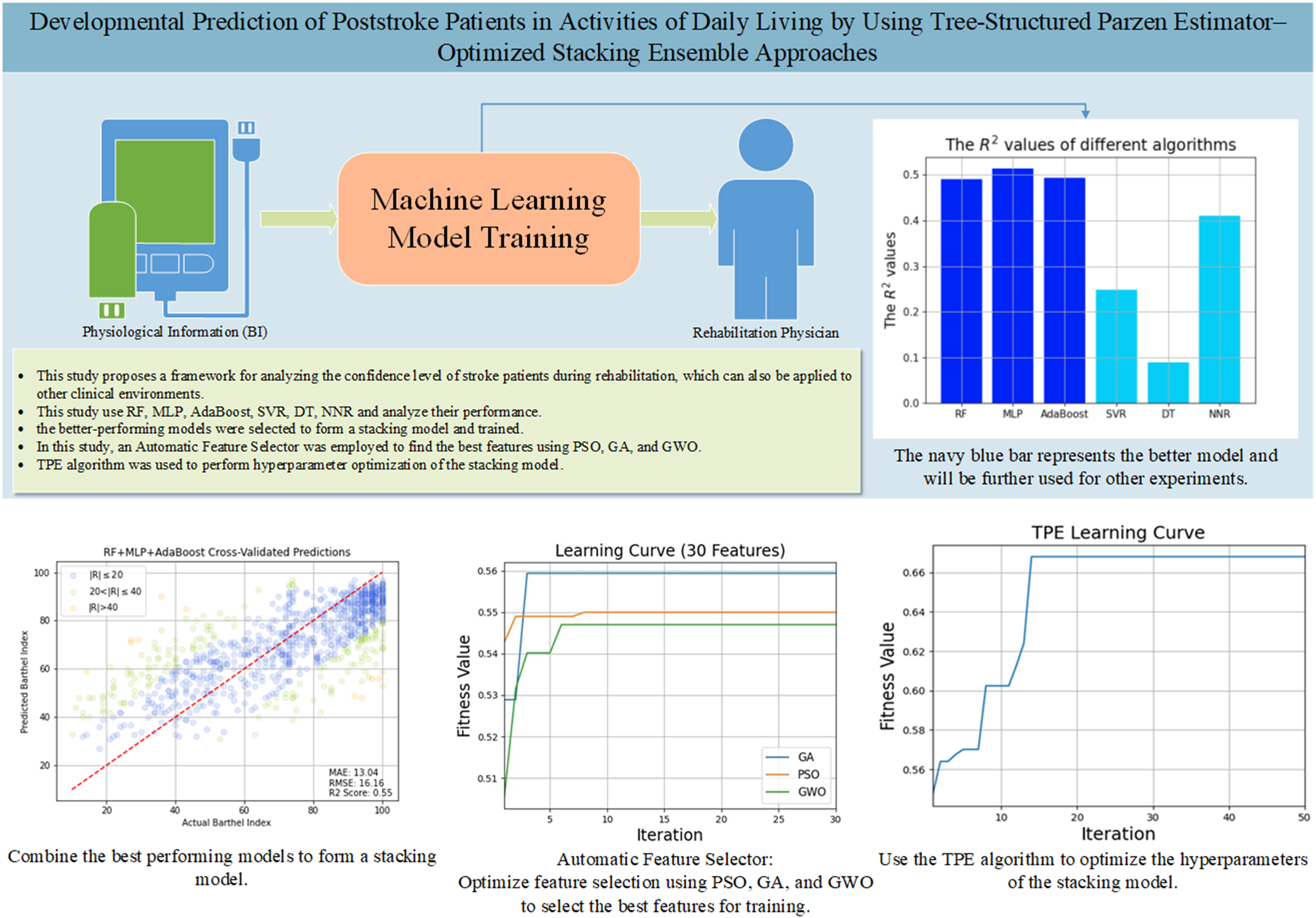
Developmental Prediction of Poststroke Patients in Activities of Daily Living by Using Tree-Structured Parzen Estimator–Optimized Stacking Ensemble Approaches

Developmental Prediction of Poststroke Patients in Activities of Daily Living by Using Tree-Structured Parzen Estimator–Optimized Stacking Ensemble Approaches

Pei-Hua Lin, Ping-Huan Kuo, Kuan-Lin Chen
IEEE Journal of Biomedical and Health Informatics (JBHI), 2024
We predict discharge Barthel Index for stroke inpatients using a TPE-optimized stacking ensemble (RF+AdaBoost+MLP), achieving R²=0.5453, MAE=12.797, and RMSE=16.182 on 878 cases, with admission BI identified as the most critical feature.
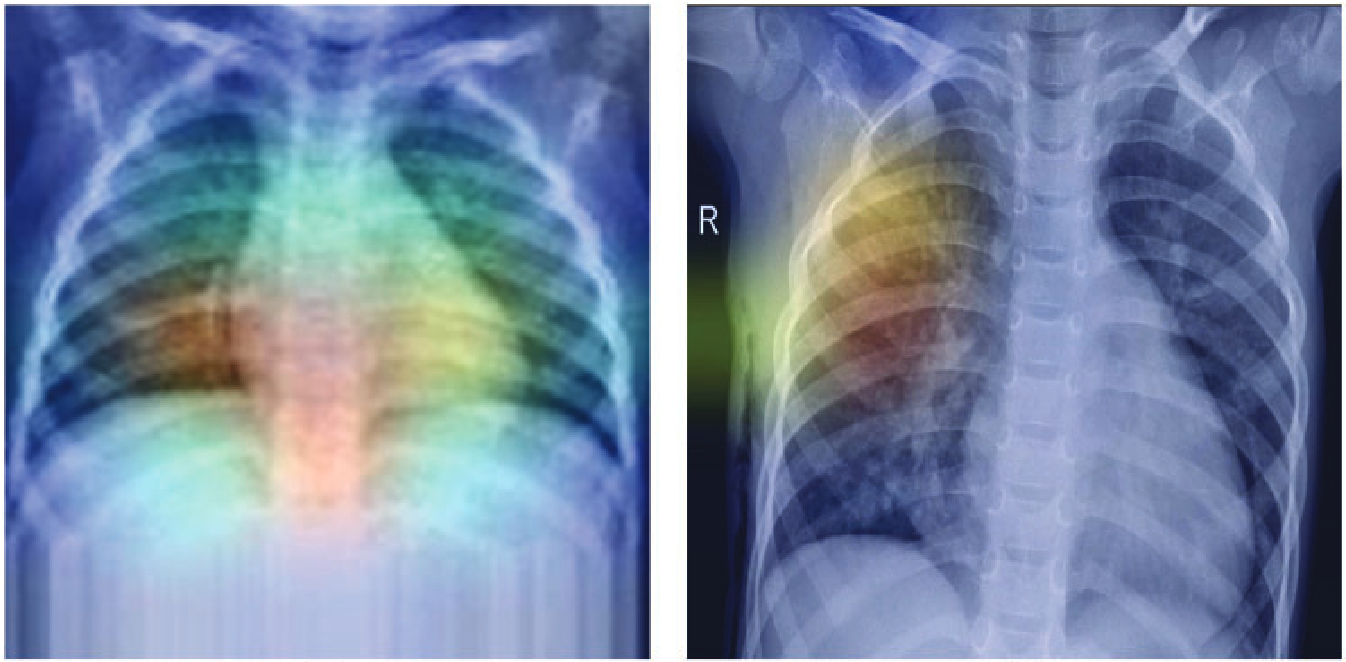
Optical Based Gradient-Weighted Class Activation Mapping and Transfer Learning Integrated Pneumonia Prediction Model

Optical Based Gradient-Weighted Class Activation Mapping and Transfer Learning Integrated Pneumonia Prediction Model

Chia-Wei Jan, Yu-Jhih Chiu, Kuan-Lin Chen, Ting-Chun Yao, Ping-Huan Kuo
Computer Systems Science and Engineering (CSSE), 2024
We introduce GCPNet, a chest X-ray pneumonia aid that fuses transfer learning with Grad-CAM–guided re-training—up-weighting samples whose attention drifts off-center—and, with augmentation, reaches 97.2% accuracy with interpretable heatmaps.
Two-stage fuzzy object grasping controller for a humanoid robot with proximal policy optimization

Two-stage fuzzy object grasping controller for a humanoid robot with proximal policy optimization

Ping-Huan Kuo, Kuan-Lin Chen
Engineering Applications of Artificial Intelligence (EAAI), 2023
We present a two-stage PPO + fuzzy-logic pipeline that teaches the NAO humanoid to first grasp and then place objects, with ABC-based parameter optimization delivering faster convergence and higher success in simulation robot.
Sequential sensor fusion-based W-DDPG gait controller of bipedal robots for adaptive slope walking

Sequential sensor fusion-based W-DDPG gait controller of bipedal robots for adaptive slope walking

Ping-Huan Kuo, Jun Hu, Kuan-Lin Chen, Wei-Hsin Chang, Xin-Yu Chen, Chiou-Jye Huang
Advanced Engineering Informatics (AEI), 2023
We perform 2-level wavelet decomposition on 6-DoF IMU sequences and feed them to W-DDPG to adapt 15 CPG gait parameters for uphill/downhill walking. Compared with strong baselines and network variants, the approach is more stable, with the LSTM+wavelet variant achieving the lowest IMU and trajectory MAEs; real-robot tests on an OP3 at ±2.1° and ±4.7° confirm feasibility.
Intelligent proximal-policy-optimization-based decision-making system for humanoid robots

Intelligent proximal-policy-optimization-based decision-making system for humanoid robots

Ping-Huan Kuo, Wei-Cyuan Yang, Po-Wei Hsu, Kuan-Lin Chen
Advanced Engineering Informatics (AEI), 2023
We couple an InfoGAN gait generator with a PPO-based decision maker so a humanoid can perceive its scene and autonomously select left/forward/right gaits; the approach outperforms TRPO, TD3, and A2C and is validated in simulation and on real robots (OP3 with obstacle avoidance; NAO for pick-and-place).

Miscellanea

  • Engineering Applications of Artificial Intelligence (EAAI) cover
    Peer Reviewing — Engineering Applications of Artificial Intelligence (Elsevier), 11 reviews (2023–2025).

Contact

Contact Me

Social Contacts